
AI software development
Custom AI software, built by a team that ships its own AI products
We design and build custom AI software: internal assistants, search over your documents, AI features inside your SaaS, and complete AI products. We focus on what makes AI work in production: grounded answers, evaluation, guardrails, speed and cost.
Who it is for
- Companies that want an AI assistant trained on their own knowledge
- SaaS teams adding AI features to their product
- Founders building an AI-first product or MVP
- Teams whose AI prototype works in a demo but not in production
What you get
- AI product discovery
- Use case definition, feasibility tests on your data, model choice and a cost estimate per user or per request.
- RAG and knowledge assistants
- Search and Q&A over your documents, tickets and databases, with sources shown for every answer.
- AI features in your product
- Summaries, smart search, recommendations, writing assistants or data extraction built into your app.
- Complete AI products
- From MVP to launch: backend, frontend, payments, analytics and the AI pipeline.
- Evaluation and guardrails
- Test sets, automatic checks and fallbacks that catch wrong or invented answers before users see them.
- Model and cost optimization
- The right model per task, caching and batching to keep latency and API costs low.
AI that works on real data, not only in demos
Building an AI demo takes an afternoon. Building AI software people trust takes engineering. The hard parts are always the same: answers that sound right but are wrong, slow responses, rising API costs, and no way to tell if a change made things better or worse.
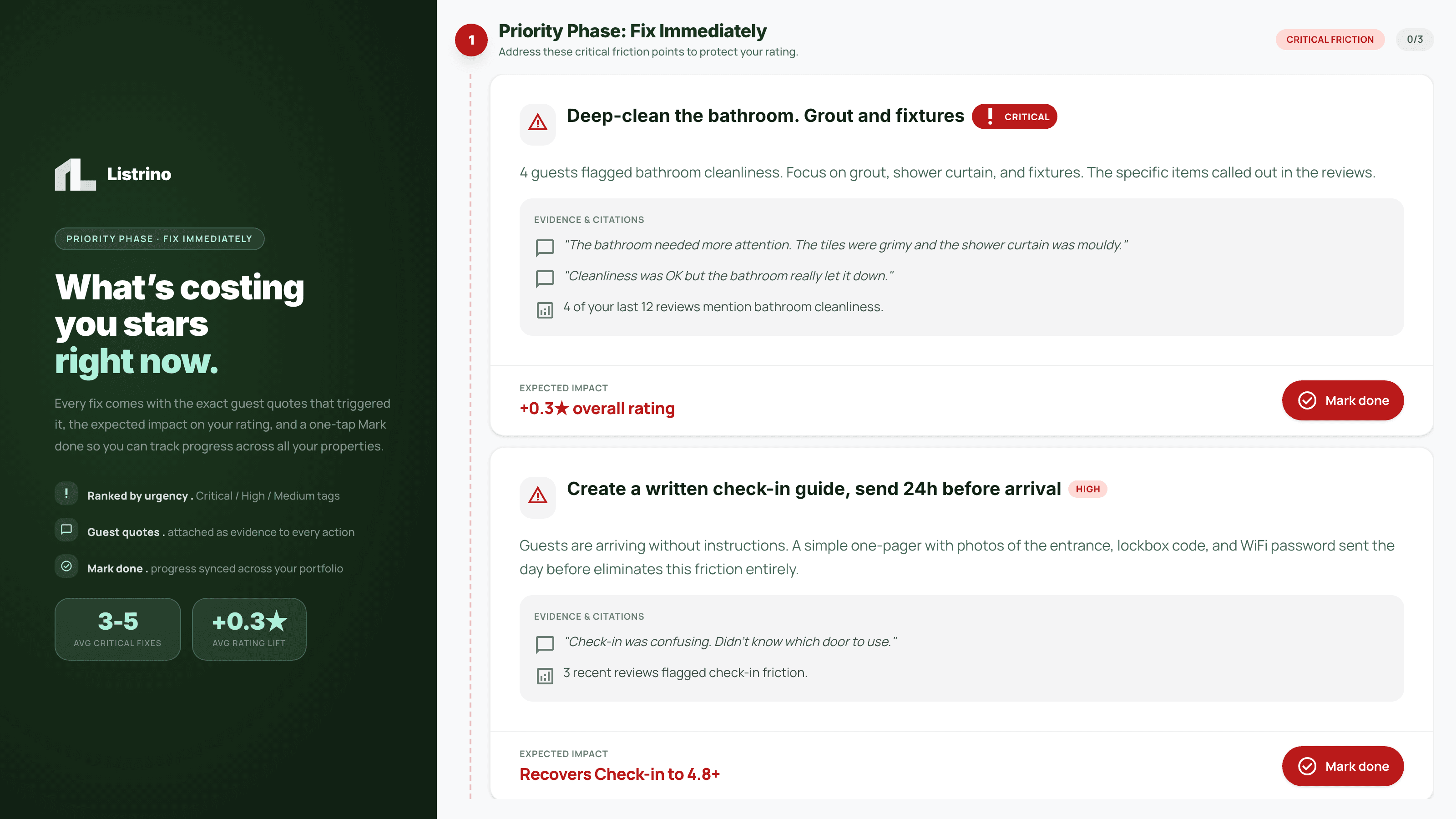
We learned this building Listrino, our own AI product. Its report engine combines scraped data, competitor benchmarks and guest reviews, then turns them into ranked recommendations. Early versions invented problems. Today every recommendation is checked against the source data in code before a user sees it.
Read the case study
See how we built a grounded AI pipeline with anti-hallucination checks in the Listrino report engine case study.
What we build
- Internal assistants that answer questions from your wiki, contracts, tickets and data, with sources.
- Customer-facing AI such as support bots, onboarding guides and product search.
- AI features in SaaS like summaries, recommendations, data extraction and writing help.
- AI-first products where the AI pipeline is the product.
How we keep AI costs predictable
We estimate cost per request before building, route simple steps to smaller models, cache repeated work and batch background jobs. You see cost per feature in your dashboard, not a surprise on your API bill.
How it works
- 01
Discover
We define the use case, success metrics and test feasibility on a sample of your data.
- 02
Prototype
A working prototype in one to three weeks to validate quality with real users.
- 03
Build
Production architecture, evaluation, security, monitoring and a clean user interface.
- 04
Launch and iterate
We ship, measure quality and cost, and improve prompts, retrieval and models over time.
Tools and platforms
- OpenAI
- Anthropic Claude
- Google Gemini
- Mistral
- Vercel AI SDK
- LangChain
- pgvector
- Neon Postgres
- Next.js
- Python
- AWS
- Vercel
Related work
 Our product
Listrino
A grounded AI engine that turns 15 hours of analysis into 2 minutes
Listrino is our own AI SaaS for Airbnb and Booking.com hosts. We built an AI pipeline that combines scraped listing data, guest reviews, local competitors and platform guidelines into a ranked action plan, with every recommendation checked against its source before a user sees it.
< 2 min per report, down from 15+ hours of manual work
Read case study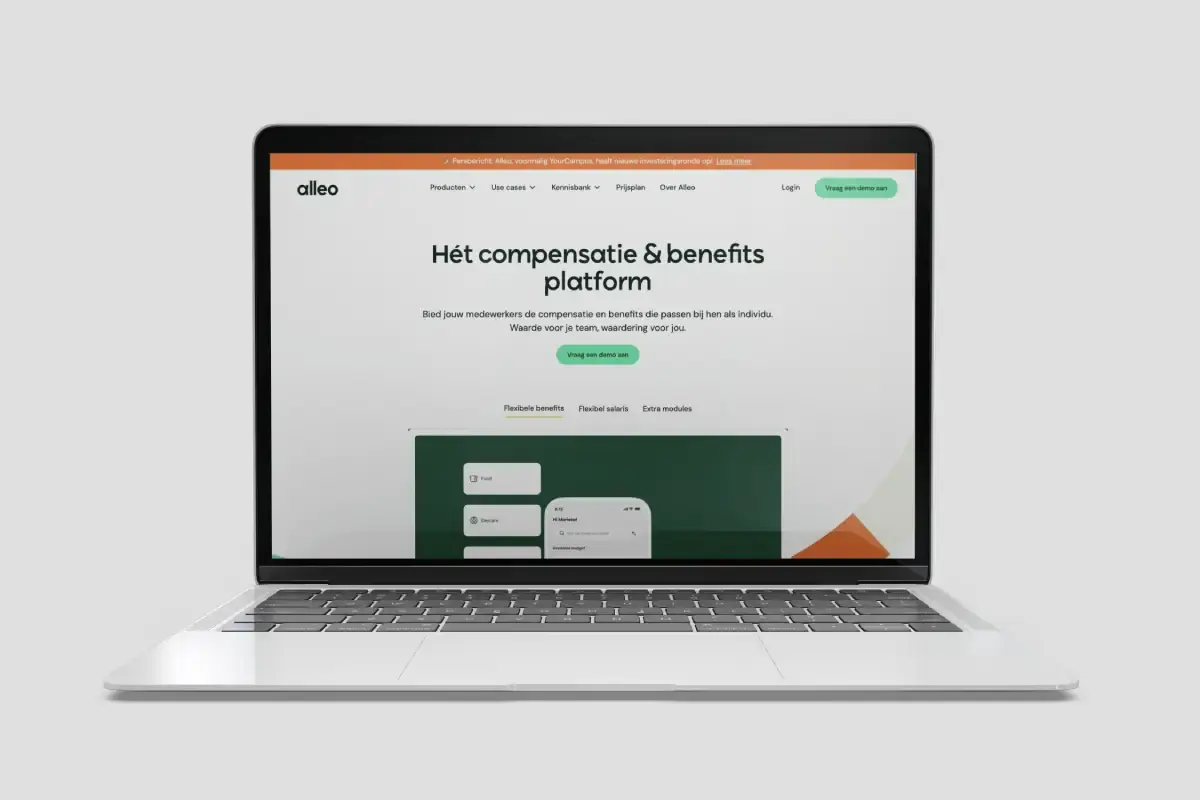 Client work
Alleo
A web and mobile compensation and benefits platform for Alleo
Alleo lets employers offer flexible, personalized benefits to their employees. We helped build the platform on web and mobile, with integrations into HR and payroll systems and options such as flexible salaries, tax savings and a benefits marketplace.
2 platforms shipped: web and mobile
Read case studyFrequently asked questions
What is RAG and do we need it?
RAG, or retrieval augmented generation, lets an AI model answer using your own documents and data instead of only its training. You need it when answers must be specific to your company and backed by sources, for example an internal knowledge assistant or customer support bot.
How do you stop the AI from making things up?
We ground answers in retrieved data, constrain the output format, verify claims against the source in code, and fall back to a safe answer when evidence is missing. In Listrino, every recommendation must be backed by a real quote or data point, or it is dropped.
Which AI model do you use?
We are model-agnostic. We test OpenAI, Anthropic, Google and open models on your task and pick on quality, speed, cost and data requirements. Often different steps use different models.
How long does it take to build an AI MVP?
A focused AI MVP usually takes six to twelve weeks. A first working prototype to test with users often takes one to three weeks.
Who owns the code and the data?
You do. You get the full source code, your own API accounts and your data stays in your infrastructure.
Can you improve an AI prototype that someone else built?
Yes. We often take over prototypes that work in demos but fail on real data. We start with an evaluation to measure where it breaks, then fix retrieval, prompts, architecture and guardrails.
Have a project or an AI idea?
Tell us what you want to fix or build. We reply within one business day with honest next steps.